
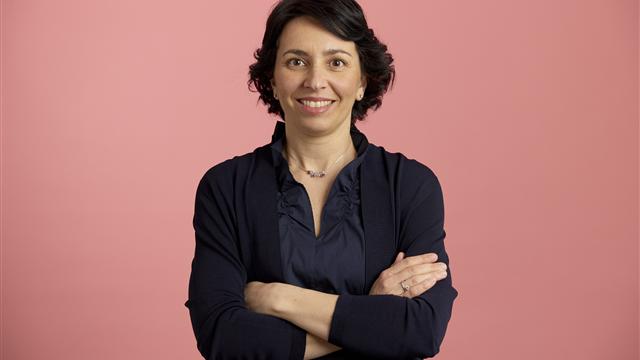
How did you get into insurtech?
I trained as an actuary, so insurance was my starting point rather than something I fell into later. I was drawn early on to how data, risk and pricing decisions translate directly into real-world outcomes.
I then spent around ten years at McKinsey working across multiple industries, which is where I developed a real appetite for change and business impact. Consulting gave me exposure to transformation at scale, but I increasingly wanted to be closer to execution rather than advice.
Before joining ManyPets, I held senior roles across Operations and Business Development in commercial insurance, at Beazley and Charles Taylor. While at Charles Taylor, I led an investment alongside a PE into an insurance technology business, and sat on the board of that company through various phases of international scaling. That experience brought me much closer to the reality of building and deploying technology inside insurance organisations, and to the people challenges that come with growth.
Throughout my career, I’ve made decisions based on two things: the people I would work with and the opportunity to learn. Insurtech scores highly on both. It combines strong insurance fundamentals with constant learning, fast iteration and teams that are motivated to change how the industry works. That’s what ultimately drew me in and what’s kept me here.
What made you want to get into leadership?
I’ve always been drawn to leadership, but not in a formal or hierarchical sense. Even early on, I naturally gravitated towards taking initiative – whether that was volunteering with younger children at school, leading international youth exchanges at university, or simply organising things for groups of friends. I’ve always enjoyed bringing people together and making things happen.
That instinct became more concrete when I joined McKinsey. I remember on my first day a partner saying, ‘We’re training people here to become future CEOs.’ At the time it felt completely unrealistic. I could build pricing models, but I knew very little about how to actually run a business.
What stayed with me wasn’t the idea of a title, but the idea that leadership is something you grow into through exposure, learning and responsibility. Over time, as I worked more closely with senior teams and saw how decisions were made, I started to realise that running a business wasn’t about having all the answers – it was about creating clarity, asking the right questions and building teams.
That’s when leadership stopped feeling abstract and started to feel like something I could genuinely grow into – and something I would enjoy.
What, if any, hurdles have you had to overcome in your career to date and how did you do that?
One of the biggest hurdles I’ve faced was working abroad early in my career, in a language that wasn’t my mother tongue, often in environments that were predominantly male. That alone requires extra effort – to be precise, to be heard, and to feel confident contributing.
I remember being told, by other women who wanted to protect me, that it was better to wear trousers at some senior meetings to have more credibility. Like many women, I did encounter inappropriate comments and behaviours along the way. They weren’t pleasant, and they did make me reflect on whether I truly belonged in certain rooms. But ultimately, if you don’t play you can’t make an impact – and I wanted things to change.
The good thing of leadership is that you have both the honour and the responsibility to set the tone, and I have always wanted to create an environment where everyone (including myself!) could be accepted and thrive for who they are.
What single decision do you think has been most impactful in getting you to this point in your career?
The most impactful decision I’ve made has been repeatedly choosing to take calculated risks by changing direction, rather than following a linear career path.
I qualified as an actuary but, when most people expected me to stay within the profession, I chose to join McKinsey to broaden my horizons. When I later moved back into industry, I took on a COO role despite having limited operational experience, leading teams of experts who often had far deeper technical knowledge than I did. That forced me to think very clearly about where I could add value as a leader through clarity, questions and decision-making rather than subject-matter expertise.
Later, after being promoted to CEO, I made what looked like a backwards move by joining ManyPets as CFO, again without a traditional finance background. Many people questioned that decision, but for me it was deliberate. It allowed me to build broader experience and learn new skills. Managing a division in a large listed business is very different from helping scale a start-up, just as working with entrepreneurs is very different from working with more traditional executives.
Taken together, those decisions gave me the range and perspective needed to say yes when I was offered the Group CEO role at ManyPets.
What or who has helped you the most in your career?
I’ve been helped most by people who were willing to take a risk on me before I felt fully ready. That includes managers, investors and board members / chairs who trusted my judgement, gave me stretch roles and allowed me to learn on the job rather than expecting a perfect fit on paper.
I’ve also learned a huge amount from working with people who were very different from me technically and stylistically. Managing experts who knew far more than I did in their fields forced me to sharpen how I add value, how I listen, and how I make decisions. That experience shaped my leadership more than any formal training.
More broadly, having strong personal support at different stages of my life has made it easier to take professional risks. Someone once said to me "the best career decision you can make is to marry well", and I found that to be so true!
Being able to step into new roles and unfamiliar territory often depends on feeling supported, and I don’t underestimate the role of my husband, my family, our nanny in enabling me to make the choices I’ve made.
What moment stands out to you as a career highlight?
One moment that stands out as a real career highlight was leading the transformation of ManyPets. I had to rethink our operating model while, at the same time, building a leadership team with the skills needed for the future. That combination is hard. You’re asking the business to change while the leadership team itself is still forming.
We had to make some difficult calls on structure, capabilities and ways of working, while also being very deliberate about how we showed up as a team. I introduced the phrase 'one team, one plan, one voice' and repeated it relentlessly to signal the behaviours I expected. I’m a football fan, and I genuinely believe that a well-functioning team will always outperform a group of brilliant individuals playing separately.
So I prioritised building a strong leadership team not just with the right skills, but with the right mindset and willingness to work together. Many of the executives were new, and building trust takes time. It also requires honesty. At times, that meant being uncomfortably candid with each other, but always on a foundation of trust and mutual respect.
One moment that really crystallised this was during one of our first leadership offsites. Over dinner, I asked everyone to share a personal experience that had shaped who they are. Watching people open up, show vulnerability and genuine compassion for each other changed the dynamic of the team. That depth of connection made it possible to balance support with challenge through the transformation.
For me, that combination of business impact and human connection is what great leadership looks like.
When it comes to women in insurtech, is there enough representation?
In insurtech, and tech more broadly, I still think we have both a pipeline and a progression issue.
At the pipeline level, there simply aren’t enough women coming through STEM subjects, which means fewer women engineers and technical specialists entering the industry in the first place. That’s a structural challenge that starts well before people enter the workforce. I often refer to this as the 'dream gap' between girls and boys, driven by stereotypes that form from a very young age and that all of us can play a role in challenging.
There’s also a progression problem. Women are often underrepresented at senior levels because of assumptions about risk and readiness. Leaders who don’t fit the traditional or stereotypical profile are sometimes seen as a bigger appointment risk, particularly in fast-moving, high-growth environments.
On top of that, there are behavioural differences that matter. On average, women tend to be more cautious about putting themselves forward for stretch roles or promotions. When they are asked, they’re more likely to focus on the experience they don’t yet have rather than the strengths they do bring. That can be misread as a lack of confidence, when in reality it’s often a different way of assessing risk.
That’s why leadership matters so much. I believe leaders have a responsibility to actively counter this by encouraging talent, backing potential, and creating environments where people are supported to take risks and grow. Progress doesn’t happen by accident. It happens when leaders are deliberate about who they back and how they develop the next generation.
What advice would you give to other female leaders?
I’d encourage female leaders to get comfortable with being uncomfortable. Growth often comes from taking roles where you’re not the expert in the room, but where you can add value through clarity, judgement and leadership. Waiting until everything feels safe or familiar usually means waiting too long.
I’d also stress the importance of building strong relationships and support systems around you. Leadership can be lonely, and having people who will challenge you honestly, back you when it matters, and help you keep perspective is critical. You don’t have to do it alone, but you do have to be willing to step forward.
What advice would you give to young women just starting out in their careers?
For young women starting out, I’d say the best investment you can make early in your career is in building knowledge and experience, even if that comes with a lower salary, less flashy titles or some short-term sacrifices.
When you have your full career ahead of you and usually fewer family responsibilities, that’s your point of maximum return on investment. Optimising too early for title or pay can feel rewarding in the moment, but it often leads to a lower payoff over the long run.
I’ve personally always made my career choices based on learning opportunities and the people I would work with: people I trusted, could learn from, and who were willing to take a risk on me.
Second, get your voice in the room. Women often speak up less in meetings, especially early in their careers. Do it anyway, even if it feels uncomfortable. Ask questions if you don’t yet have a strong point to make, challenge assumptions, or find a way to move the conversation forward. You don’t need to be the most experienced person in the room to add value.
Finally, invest in understanding yourself. What drives you, what triggers you, and how you show up under pressure matters enormously over a long career. As Leonardo da Vinci said, "There is no smaller or greater mastery than the mastery of self." That self-awareness becomes a real advantage as you grow into more senior roles.