
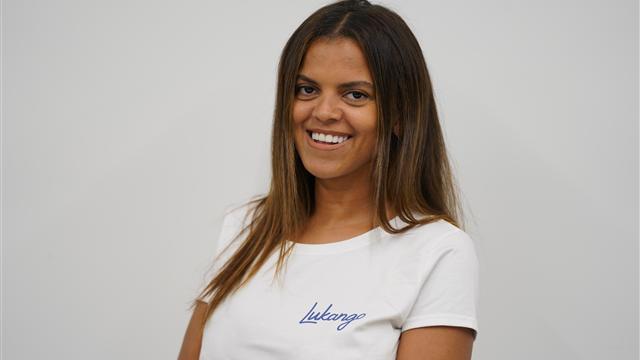
How did you get into insurtech?
I started in insurance about 20 years ago as my first job out of university. I applied to a range of graduate programmes, and Munich Re accepted me. I was keen to go into underwriting because I thought that was the sexy, cool part of insurance. I now know there isn’t a sexy part. But instead, I joined as a business analyst in the technology department.
At the time, I didn’t know much about insurance, but I fell in love with the job, and over time I progressed into project management and then programme management roles. I also spent time in Abu Dhabi working for a Munich Re subsidiary in the health business, which gave me broader international experience.
When I came back, I helped build a business called Digital Partners within Munich Re—initially leading technology, and eventually becoming Global CIO. It was set up very much like a corporate start-up, focused on helping insurtechs get to market, from product pricing through to tech and compliance.
Because I joined early, my role was quite broad—covering technology, data, delivery and operations, as well as some finance and HR. It really felt like a start-up environment, just without the same pressure on funding.
After helping to launch around 20 insurtech businesses, I decided I wanted to do it myself—and that’s what led to Lukango.
What made you decide to set up a company?
I’d been at Digital Partners for about five years and, with some changes happening, I found myself at a bit of a crossroads.
Around that time, I was on a panel talking about why it’s important to have more women running insurance businesses, and I remember walking away thinking: if you’re going to say that, you’ve got to put your money where your mouth is.
I was also in the final stages of interviewing for a couple of senior roles and seriously considering them, but at the same time I had this growing sense that I could build something myself.
In one of those interviews, I met someone who had actually hired me into Munich Re about 15 years earlier. I told him I was thinking about starting a business, and he said something that really stuck with me: it’s not often in life that you have the time, the financial stability, a strong idea, and the right market opportunity all at once.
He said, “We’d love to hire you, but if I were you, I’d take the chance. If it doesn’t work out in a couple of years, you’ll be even more employable and can easily step back into a senior role.”
From that point, I decided to go for it.
I was speaking to my now co-founder, Selina, who has also been one of my best friends since school, about what I was planning, and she was at a similar crossroads in her career. So we decided to build it together, alongside a small group of people I’d worked with previously. Over time, that’s evolved, and today it’s the two of us as co-founders.
We’re in a small minority. Fewer than 5% of start-ups have two female co-founders, and even fewer have two women of colour. But we see that as a strength. It makes us stand out, and if we achieve what we set out to do, it becomes a proof point that this is possible.
More broadly, this decision was also driven by a bigger sense of purpose. I spent a lot of time thinking about what I really wanted to do and what gives me the most satisfaction. For me, that has become supporting other women in their careers and in business.
If Lukango is successful, the goal for me and my co-founder is to invest in other women and help create more opportunities. And even if it doesn’t succeed in the way we hope, I wouldn’t see it as a failure. We’ve already achieved things that matter. For example, only around 0.02% of funding in the UK goes to women of colour, and we’re part of that. And more importantly, I’ve learned so much that I’d be able to contribute even more to that long-term purpose.
What challenges have you had to overcome in being a female founder?
There’s a lot of data showing that female founders receive significantly less funding than male founders. In the UK, it’s around 2% of institutional capital, and I don’t believe for a second that only 2% of founders are women.
So one of the biggest challenges is figuring out how to build and scale a business within that environment. If you don’t have access to the same level of capital, you can’t grow as quickly or experiment in the same way. It’s not just about raising money in the first place, it’s about what that means for how you run the business. You have to be more considered and more efficient with every decision.
That’s something a lot of female founders are navigating, and it takes time to work out how to operate within those constraints.
There are, of course, other challenges that come with building any early-stage business. Things like hiring the right people and refining your proposition are universal. But access to capital remains one of the biggest structural hurdles.
What single decision has been most impactful in getting you to this point in your career?
One of the most impactful decisions I made was taking an opportunity to work abroad while I was at Munich Re.
As part of a leadership programme, I had the chance to spend a year overseas. I chose to go to Abu Dhabi, and that experience completely changed how I operate.
Earlier in my career, I was confident but still relatively quiet in the workplace. Moving to the UAE was very different. It’s a real melting pot of cultures, with people from all over the world. In that environment, if you don’t speak up, you don’t get heard.
It pushed me to be more direct, more confident, and to make sure I contributed and put myself forward. That shift has stayed with me throughout my career.
I didn’t fully realise the impact at the time, but looking back, it made a huge difference to how I work and how I show up. That’s why I would always say, if you get the opportunity to work in a different country, take it. You gain a level of experience and perspective that you simply can’t get by staying in one place.
What or who has helped you the most in your career?
There have been a lot of people who’ve supported me, but a few stand out.
My old boss, Andy, was incredibly inspirational. He thought about things in a completely different way to everyone else and was a real trailblazer. There was a huge amount to learn from him, but one piece of advice he gave me has always stuck: hire good people and get out of their way.
I’ve really taken that on board and have been lucky to build exceptional teams of people. Having high-performing teams makes a huge difference, they take pressure off, challenge you, and ultimately make you better at what you do.
Outside of work, my mum has been a huge influence and inspiration. She was a single parent, and she always said to me: make sure you have your own money, your own friends, and a good job. There were points in her life when she didn’t have those things, and she was very clear that she didn’t want that for me. That’s always stayed with me.
And more recently, my husband. He’s the one behind the scenes, especially on the harder days. When you’re running a start-up, it can be all-consuming, and he’s the person who brings perspective, supports me through the ups and downs, and isn’t afraid to challenge me when I need it. He’s my biggest supporter and the one who keeps me sane.
What I’ve realised is that it’s not just the people you work with, it’s the people around you more broadly. When you’re building a start-up, it’s very different from a corporate role. I’ve also had two children since starting the business, so without that support system outside of work, there’s no way I’d be able to do it.
What moment stands out to you as a career highlight?
The moment that stands out most is becoming CIO at Digital Partners.
My background was primarily in project and programme management, and while I’d delivered a lot of technology initiatives, I’m not an engineer by training. So stepping into a role where I was ultimately responsible for technology was a big moment for me.
It meant being trusted to lead an area I hadn’t come up through in the traditional way, which made it both challenging and incredibly rewarding.
And more broadly, being the most senior technology leader in the business - as a woman, in industries where representation is still lacking - was something I’m really proud of. That definitely stands out as a career highlight.
When it comes to women in insurtech, is there enough representation?
There are some incredibly strong female founders in insurtech, people like Phoebe Chibuzo Hugh, who was at Brolly and is now at Monzo, Megan Bingham-Walker at Anansi, and Louise Birritteri at Pikl.
It’s a really exciting space right now. There’s a strong cohort of female founders coming through, and they’re building genuinely significant businesses. There’s also a lot of collaboration and support across the group, which makes it feel like a very energised part of the market.
What advice would you give to other women wanting to emulate your success?
I’d start with: know your worth. If you’re in a corporate role and feel underpaid or overlooked, ask for more. What’s the worst that can happen? If you believe you’re right for something, you can either sit back and complain about it, or you can go and get it.
Secondly, build relationships with the people who matter. Reach out to senior leaders, even the CEO, and ask for time. It might feel uncomfortable, especially early in your career, but most people are more open than you think. Once they know who you are, you’re far more likely to be considered when opportunities come up. And don’t be afraid to be direct, tell people what you’re interested in and ask for their help.
If you’re in a start-up, the same applies externally. Speak to others in your industry, even if it feels uncomfortable. That’s often where the most valuable connections come from.
Another big one is feedback. Actively seek it out, and don’t take it personally. Self-awareness takes time, but understanding what you can improve and actually doing something about it is what helps you grow.
And finally, be clear on what you ultimately want. Take the time to define your long-term goal or purpose. Once you have that, every decision becomes easier because you’re just taking steps towards something bigger.